
No products in the cart.
Blog
Will RSO Show Up on a Drug Test? A Comprehensive Guide
07
Sep
Sep
Rick Simpson Oil (RSO) raises concerns for users facing drug tests due to its high THC content. This guide actively explores RSO’s composition, drug testing mechanics, detection timelines, influencing factors, and practical strategies to manage outcomes. Additionally, it addresses legal implications, compares RSO to other cannabis products, and debunks myths to empower informed decisions. By 2025, evolving cannabis laws will amplify the need for clarity, especially for queries like “how long does RSO stay in your system for a urine test?” Always consult healthcare or legal professionals for personalized guidance.
What Is RSO, and Why Does It Trigger Drug Tests?
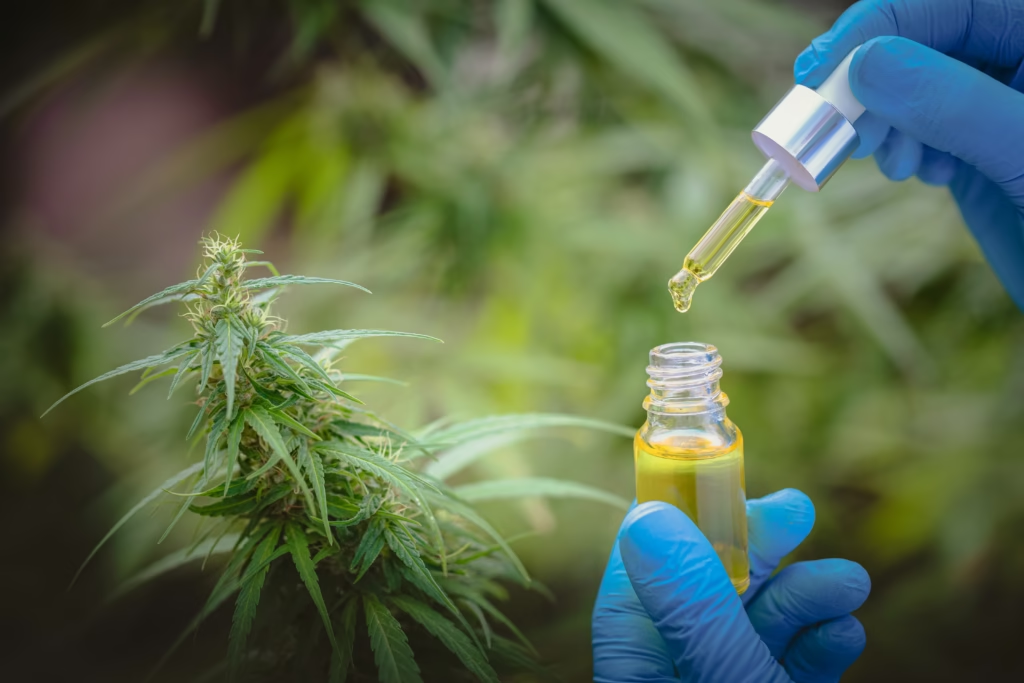
Rick Simpson Oil, a potent cannabis concentrate, contains 60-90% THC, alongside CBD, terpenes, and flavonoids. Users extract it using solvents like ethanol, consuming it orally, topically, or via suppositories for its entourage effect, where compounds boost each other’s potency. Named after activist Rick Simpson, who championed its medical use in the early 2000s, RSO’s high THC levels distinguish it from milder products like CBD oils.
Consequently, RSO’s THC metabolizes into 11-hydroxy-THC and THC-COOH, the latter being the primary target of drug tests. Unlike CBD isolates, which rarely trigger positives, RSO’s full-spectrum profile ensures detection in standard screenings. For instance, employers, probation officers, and sports organizations test for marijuana metabolites, and RSO’s concentrated nature heightens the risk. Thus, users navigating the workplace or legal scrutiny must understand its detectability.
How Do Drug Tests Identify RSO?
Drug tests target THC-COOH, a non-psychoactive metabolite stored in fat cells, rather than active THC. Labs use immunoassays for initial screens, setting a 50 ng/mL cutoff for urine, followed by gas chromatography-mass spectrometry (GC-MS) at 15 ng/mL for confirmation. Different tests—urine, blood, saliva, and hair—offer varying detection windows and sensitivities.
- Urine Tests: These dominate 90% of screenings, revealing metabolite buildup over days or weeks.
- Blood Tests: These detect recent use, measuring active THC and metabolites.
- Saliva Tests: These capture oral residue, ideal for recent exposure.
- Hair Tests: These provide a 90-day history, detecting even low-dose use.
RSO, whether ingested or applied, enters the bloodstream, converting to detectable metabolites. Therefore, its administration method—sublingual, topical, or mixed into food—does not prevent detection, especially for frequent users.
Detection Timelines for RSO Drug Test
Detection windows vary by test type, usage frequency, and individual factors. Below, we outline timelines for RSO users.
Urine Tests: The Standard Choice
Employers prefer urine tests for their cost-effectiveness and extended detection. Occasional RSO users (single dose) clear THC-COOH in 3-7 days, while moderate users (2-4 times weekly) need 10-15 days. Chronic daily users face 30-45 days or more due to RSO’s potency (up to 900mg THC per gram). In 2025, labs lower their cutoffs to 20 ng/mL, increasing risks for queries like “RSO detection time in urine.”
Blood Tests: Recent Use Detection
Blood tests measure active THC (detectable 2-24 hours post-use) and metabolites (up to 7 days for chronic users). RSO’s rapid absorption, peaking in 30-60 minutes, mirrors smoked cannabis, ensuring positives if consumed hours before testing. This addresses concerns like “Does topical RSO application show up on a blood test?”
Saliva Tests: Short-Term Detection
Saliva swabs detect THC for 2-24 hours post-use, with chronic users testing positive up to 72 hours. Sublingual RSO leaves residue, raising flags quickly, particularly in roadside tests. This is relevant for “RSO detection time in saliva for occasional users.”
Hair Tests: Long-Term Record
Hair tests reveal use over 90 days, as THC embeds in strands. A 1.5-inch sample covers three months, detecting even minimal RSO use. Chronic users face consistent positives, though infrequent use or hair treatments may yield false negatives.
Does RSO Specifically Trigger Drug Tests?
RSO’s 60-90% THC content guarantees detection in standard marijuana screenings, unlike THC-free CBD oils. Oral or sublingual use ensures systemic absorption, whereas topical application rarely triggers positive results due to limited skin penetration. However, high doses or broken skin may lead to trace metabolites, as studies on topical THC confirm. Advancements in 2025 testing, like point-of-care immunoassays, heighten accuracy, prolonging clearance times for RSO’s potent doses.
Scientific Insights on RSO Detection
Research confirms RSO’s detectability through its THC metabolites. A study on oral cannabis administration in healthy adults showed THC-COOH persists in urine for weeks, especially with chronic use. Another analysis found metabolites in urine, saliva, and hair up to 8 days post-exposure, with RSO’s high THC extending this further. Chemical evaluations highlight RSO’s 60-90% THC, accelerating metabolite buildup compared to flower (15-25% THC). These findings address queries like “RSO THC metabolites study” and confirm prolonged detection.
Factors Influencing RSO Detection
Multiple factors shape how long RSO’s THC lingers, creating variability in outcomes.
- Body Fat: Higher BMI extends detection, as THC stores in fat cells, lasting up to 45 days in obese chronic users.
- Metabolism: Faster metabolisms, influenced by age or genetics, clear THC quickly.
- Usage Frequency/Dosage: Occasional use (weekly rice-grain dose) clears faster than daily high doses.
- Hydration: Excessive water dilutes urine but doesn’t eliminate metabolites; labs check creatinine levels.
- Exercise: Workouts release stored THC, risking spikes if done before testing.
- Diet: High-fat diets can slow absorption, while acidic urine may prolong the detection period.
These factors, relevant to “ways to pass a drug test after using RSO for cancer,” emphasize the individual’s biological role.
RSO vs. Other Cannabis Products
RSO’s high THC content leads to longer detection windows than other cannabis products. For example:
| Product | Urine Detection (Occasional/Chronic) | Key Difference from RSO |
|---|---|---|
| Flower (Smoked) | 3-7 days / 10-30 days | Lower potency; clears faster |
| Edibles | 5-10 days / 15-45 days | Slower onset but similar linger |
| Tinctures | 3-10 days / 20-40 days | Oral like RSO; comparable risk |
| Distillate | 3-8 days / 15-35 days | Refined; fewer terpenes |
| CBD Oil (Isolate) | <1 day / 1-3 days | THC-free; minimal detection |
RSO’s entourage effect amplifies metabolite buildup, making it riskier than flower or edibles for “RSO vs edibles drug test.”
Strategies to Reduce Detection Risks
No method guarantees passing a drug test, but strategic approaches minimize risks. Abstain from RSO 30-90 days before testing, depending on usage. Hydrate heavily (2-3 liters daily) to dilute urine, though labs detect tampering. Exercise weeks ahead to burn fat-stored THC, avoiding intense sessions near test day. Detox products like Certo lack scientific backing and fail GC-MS confirmation. Synthetic urine risks legal consequences, and hair bleaching offers temporary evasion. For “how to detox THC from RSO use naturally,” prioritize time and lifestyle adjustments.
Debunking RSO Drug Testing Myths
Misconceptions about RSO and drug tests persist. Here, we clarify common myths:
- Myth: Topical RSO is undetectable. Fact: Limited absorption reduces risk, but high doses or broken skin may trigger trace positives.
- Myth: Detox teas flush THC instantly. Fact: No evidence supports this; labs detect RSO’s potent metabolites.
- Myth: Full-spectrum RSO avoids positives if CBD-dominant. Fact: THC drives detection, not CBD.
- Myth: Home tests miss RSO. Fact: They mirror lab sensitivity but may yield false positives.
- Myth: Pre-test exercise clears THC. Fact: It can spike levels by releasing stored THC.
These address concerns like “RSO detox myths” and “false positives from RSO on home drug test kits.”
THC-Free Alternatives to RSO
For medical users avoiding detection, THC-free options provide relief without risks. Broad-spectrum CBD oils offer entourage effects without THC, ideal for “THC-free alternatives to RSO.” CBG and CBN isolates target inflammation and sleep, with minimal detection risk. Terpenes like beta-caryophyllene relieve pain without THC, while hemp-derived products under 0.3% THC evade tests. These suit queries like “best low THC RSO alternatives for pain without test risk.”
Legal Implications of RSO and Positive Tests
In 2025, RSO remains federally illegal in the US (Schedule I) but is legal in 24 recreational and 38 medical states. Positive tests risk job loss, denied benefits, or probation violations, even in legal states. New York’s Labor Law 201-d protects off-duty use, but federal jobs enforce strict bans. Internationally, the UK classifies RSO as a Class B drug, with possession risking penalties. Users must research local laws and employer policies, addressing “Is Rick Simpson Oil safe for drug-tested jobs 2025?”
RSO in Specialized Testing Contexts
Specialized settings heighten RSO risks. The NFL’s 2025 THC threshold of 350 ng/mL reduces penalties, but RSO’s potency may exceed limits. The Olympics ban cannabis, with WADA detecting metabolites for months. Military zero-tolerance policies lead to discharge for positives, while probation tests treat RSO like other cannabis forms. These align with “sports drug testing RSO” and “RSO military drug test.”
Global Perspectives on RSO
Canada’s 2018 medical cannabis legalization supports RSO use, but workplace testing persists. The UK restricts RSO as a Class B drug, though medical access grows. EU countries like Germany allow low-THC hemp, but RSO faces restrictions. Global testing mirrors US standards, focusing on THC-COOH. For “Canada RSO legalization 2025,” licensed production thrives, but export rules tighten.
Frequently Asked Questions: RSO Drug Test
- Does topical RSO show up on a drug test? Rarely, due to low absorption, but high doses may lead to trace detection.
- How long until I test negative after RSO? Occasional users clear urine in 3-7 days; chronic users need 30+ days.
- Can I use RSO medically without failing? THC risks positives; use low-THC alternatives or disclose where protected.
- Do home tests detect RSO? Yes, but false positives occur; lab confirmation ensures accuracy.
- Can I flush RSO’s THC faster? No reliable method exists; time and hydration help most.
Conclusion: Navigating RSO and Drug Testing in 2025
RSO’s high THC content ensures detection in drug tests, with timelines ranging from hours to months based on test type and usage. Users must weigh personal factors, legal contexts, and testing methods to avoid consequences. As cannabis reforms advance, workplace policies evolve, but risks remain. Opt for THC-free alternatives or time use strategically. Consult experts to safeguard health and career, staying informed on regulations.
Ready to explore THC-free options? Shop Now for Safe, High-Quality Alternatives and make informed choices for your wellness journey!
